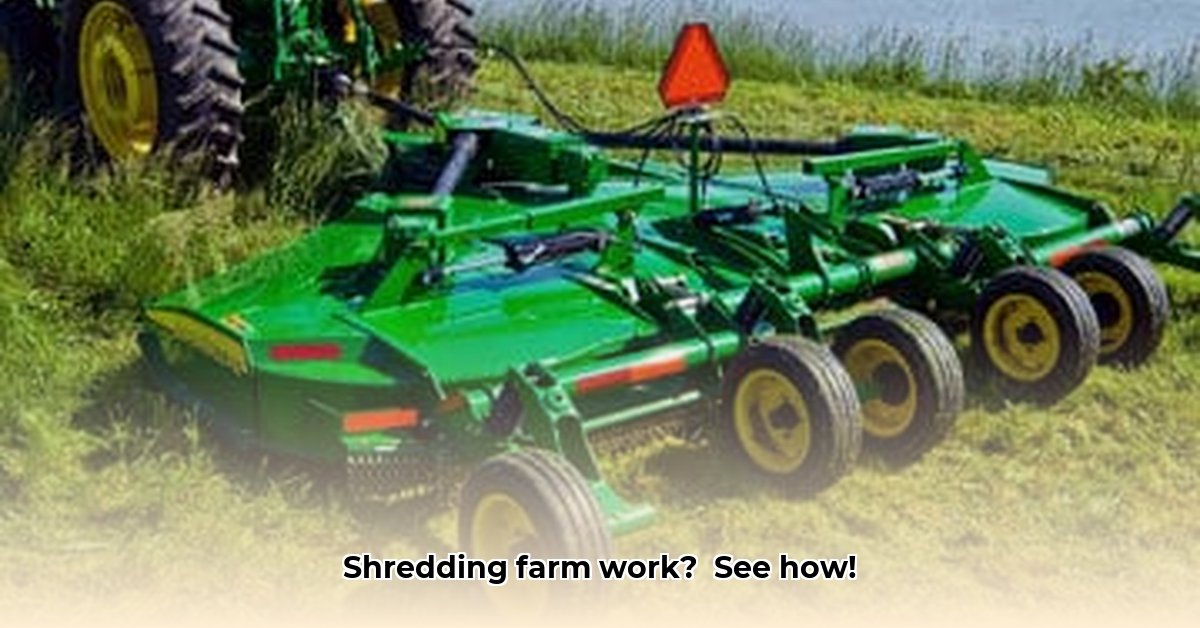
Tired of endless hours spent clearing fields and dealing with leftover crops? Ready to boost your farm's efficiency and be kinder to the environment? Then you need to learn about tractor shredders! For larger operations, consider the power of a log skidder for efficient clearing. This comprehensive guide will equip you with the knowledge to make informed decisions about integrating this powerful technology into your farming operations. We'll cover everything from choosing the right model to maintaining peak performance, ensuring you get the most out of your investment.
Why Choose a Tractor Shredder?
Tractor shredders are transforming modern, sustainable farming. They're more than just cleanup crews; they're soil-improving superheroes! By transforming leftover crops, brush, and other organic materials into valuable mulch, you're creating a closed-loop system for your farm. This translates to significant benefits:
Improved Soil Health: Nutrient-rich mulch improves soil structure and fertility, reducing your reliance on chemical fertilizers. This leads to healthier crops and higher yields. Isn't that a goal worth investing in?
Increased Efficiency: Say goodbye to backbreaking manual labor! Efficiently managing crop residues saves you valuable time and labor costs – time you can reinvest in other aspects of your farm.
Environmental Sustainability: Reducing waste and minimizing chemical use contributes to a more sustainable and environmentally friendly farming practice.
Choosing the Right Tractor Shredder: Finding Your Perfect Match
Selecting the right shredder is crucial. Think of it like choosing the right tool for the job – you wouldn't use a screwdriver to hammer a nail, would you? Several factors should guide your decision:
Farm Size and Material Volume: Consider the size of your fields and the amount of material you need to process. A small-scale operation will have vastly different needs than a large commercial farm.
Material Type: Different shredders are designed for different materials. Some excel at soft crops (e.g., corn stalks), while others handle tougher woody debris. Know your materials to select the right machine.
Budget and Long-Term Costs: Factor in not only the initial purchase price but also ongoing maintenance, repairs, and blade replacement costs. Long-term expenses are as important as initial pricing.
Tractor Compatibility: Ensure your tractor has sufficient horsepower to operate the shredder effectively. Consult your tractor's manual to confirm compatibility and avoid damaging either machine.
Tractor Shredder Maintenance: Keeping Your Machine in Top Shape
Regular maintenance is crucial for longevity and efficiency. Think of it as preventative maintenance for your farming investment. A small issue caught early can prevent major setbacks.
Daily Pre-Operation Checklist:
- Inspect for loose bolts, damaged blades, and any other potential issues.
- Tighten any loose components and address any minor issues immediately.
- Ensure all safety mechanisms are functioning correctly.
Regular Maintenance:
- Lubricate moving parts according to the manufacturer's recommendations.
- Sharpen or replace blades as needed. Dull blades reduce efficiency and can damage the material.
- Store the shredder in a dry, protected area to prevent rust and corrosion.
Tractor Shredders: Weighing the Pros and Cons
While the benefits are numerous, a balanced perspective is essential.
| Pros | Cons |
|---|---|
| Efficient biomass management | Higher initial investment cost |
| Improved soil health and fertility | Requires regular maintenance |
| Reduced reliance on chemical fertilizers | Can be noisy during operation |
| Significant time and labor savings | Needs sufficient tractor horsepower |
| Sustainable farming practices | Potential safety hazards (use caution!) |
Is a Tractor Shredder Right for You?
The decision depends on your farm's unique circumstances. Consider the following:
- Analyze your farm's size and the volume of materials you need to process.
- Identify the types of materials that will be processed.
- Develop a detailed budget that includes initial costs and long-term maintenance.
- Confirm that your tractor has the required horsepower and capabilities.
After assessing your needs, weigh the benefits against the potential drawbacks and consider consulting with experienced farmers or agricultural experts for guidance. A well-informed decision is a key to efficient and sustainable farming.
How to Calculate Return on Investment (ROI) for Tractor Shredders
Calculating the ROI is key to justifying this investment. Here's a step-by-step approach:
Step 1: Determine Initial Costs (purchase price, delivery, installation, training).
Step 2: Estimate Annual Operating Costs (fuel, maintenance, repairs, labor).
Step 3: Quantify Annual Revenue Benefits (reduced fertilizer costs, increased crop yields, additional revenue streams from mulch sales, potential government incentives or carbon credits).
Step 4: Calculate Annual Net Income (Revenue Benefits - Operating Costs).
Step 5: Calculate Simple ROI: (Total Net Income over lifespan) / (Total Initial Investment). Remember to consider the lifespan of the equipment.
Step 6: Account for Intangibles (improved soil health, reduced erosion, environmental benefits). While difficult to quantify, these long-term benefits significantly add value.
Step 7: Compare ROI with other sustainable practices. This ensures you make the most cost-effective decision for your farm's overall financial health and sustainability.
Remember, a thorough cost-benefit analysis is vital before investing in any new technology. By following these steps, you can determine if a tractor shredder is a worthwhile investment for your farm. Don't hesitate to consult with agricultural experts or equipment dealers for further guidance.